
Taste Is The New Moat
By Mitchelle Chibundu
5 MIN READAPR 02, 2026AI has made bad judgment catastrophically expensive.
A founder without design experience can create a brand identity in 40 minutes. An engineer can create ten different landing page versions before lunch. Anyone can publish a week's worth of content before the coffee runs cold.
Creation is abundant, but much of it feels wrong.
Why has the output already been named "slop"?
I've sat in enough creative reviews to know the answer isn't always talent. There's a not-so-secret thing hiding in plain sight: taste.
The cost of getting it wrong
Poor taste has always been pricey. I’ve noticed the same pattern over the years of working with founders and creative teams. If you want to position yourself as a creative, your portfolio or case study signals your taste and level of expertise before you say a word. Small details give you away. The spacing, the transitions, the way you organise your thinking. That’s why, almost every time someone sees something I’ve touched, designed, or produced, the first thing they say is, "I can tell you're a designer."
A cheap-looking brand signals cheap goods. A portfolio that looks unfinished tells the room the thinking is unfinished, too. People call these soft corners. They are often the difference between a deal closed and a deal lost, a client retained and a client who never comes back.
The difference today is speed and volume. When it took weeks to produce a bad brand identity, you had time to course-correct. When you can make fifty bad ones in a day and ship three by Thursday, the damage accumulates before anyone notices. Abundance without judgment doesn’t increase your chances of getting it right. It only raises your odds of getting it wrong.
“Taste is subtle, and that’s why it’s powerful. When everything can be generated, taste is what filters and elevates.”
What is Taste?
Most people believe that taste is either innate, like perfect pitch, or completely inexplicable, an intangible "I know it when I see it" trait that cannot be taught. Both are incorrect.
Taste is accumulated judgment. It is your trained ability to recognise what feels right, and more importantly, what doesn’t.
Generation was never the difficult part. Knowing what to do with what you generate, whether to stop or push harder, and when to toss it all away and start over has always been a rare skill. We didn't notice because getting to good enough used to take so long that most individuals gave up before they got there.
My taste in digital technology is similar to what I've formed by rewatching films and analysing sentence forms. If you're building across disciplines, and most founders and creators are, your taste in one field can spread across others, but only if you have the humility to approach a new venture with the curiosity to grow your judgment within it, over time. This means taste can be purposefully developed, across every field you enter.
You build taste in the same way you grow any other type of intelligence: by exposing yourself to outstanding work, learning to articulate why it's excellent, and establishing a critical vocabulary that allows you to get from "something feels wrong" to "here's exactly what's wrong and how to fix it." You accumulate a mental library large enough that your gut becomes a dependable shortcut with a magical feeling in your stomach.
“Most people don’t lack ability. Where they fall short is the eye to recognise when they’ve arrived.”
The refinement problem
What most people overlook when working with AI is that the technology can bring you to 70% pretty quickly. The difference between 70% and actually good lies in taste, and it is as difficult as it has always been.
People who are succeeding with AI right now are the folks who understand what "finished" looks like. They are the ones who produce ten options and quickly choose which two are worth pursuing. They can look at a layout and immediately say, "The hierarchy is off, the type needs to breathe, and that colour clashes with everything else". It happens not because they followed a checklist, but because they trained their eyes to recognise it.
Without that, AI is just a photocopier with better marketing. Undeniably faster, yet fundamentally dependent on the judgment of the person operating it.
This is exactly why we built Hourze, but that's a conversation for another piece.
How to start building Taste
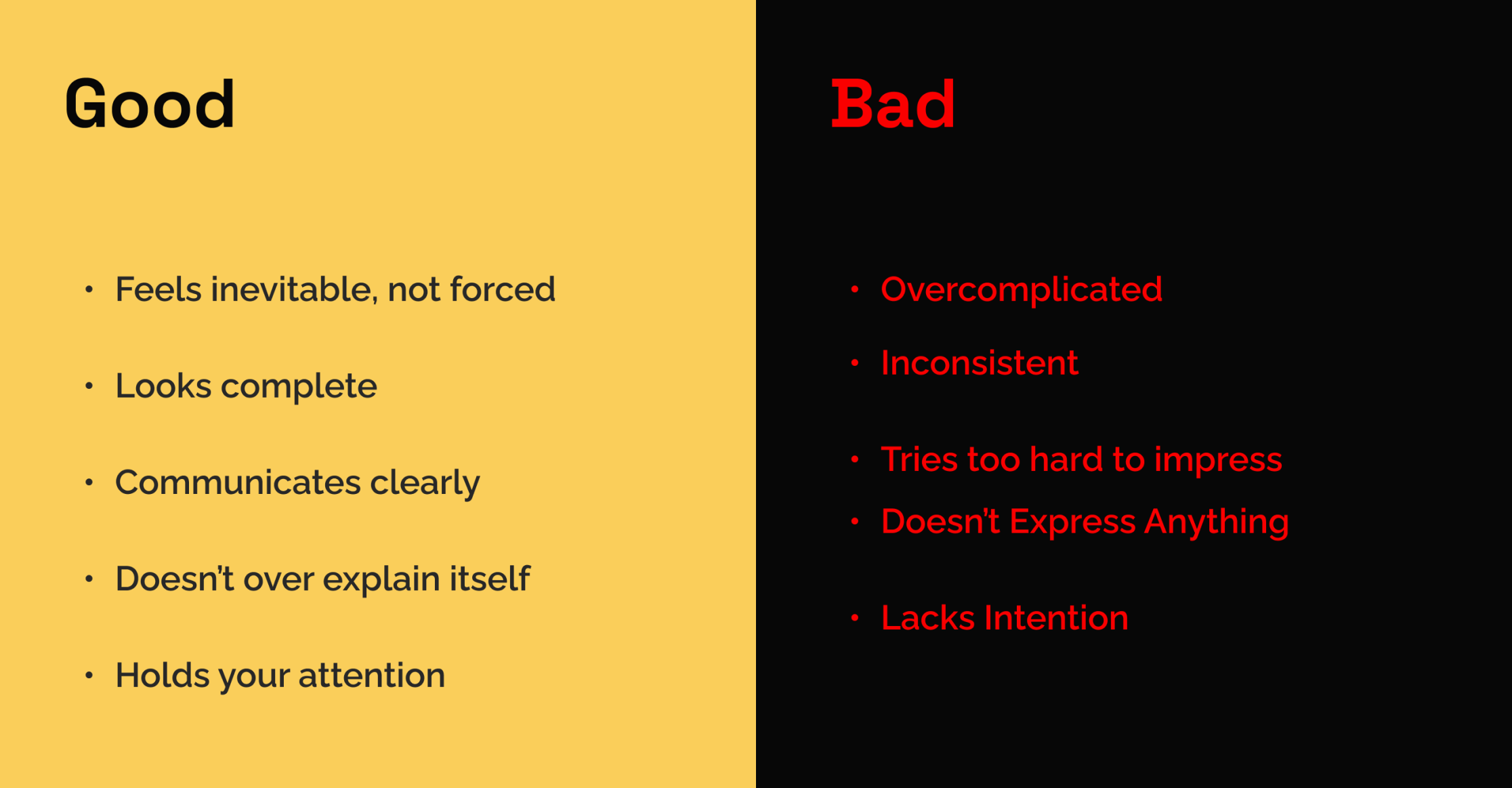
Study work you admire until you can describe why it's good in precise terms. Not the simple "I like the vibe", but also "the weight of the headline creates tension with the lightness of the body copy, and that tension holds your attention." Vague appreciation is not taste. Specific articulation is.
Collect things obsessively. The most astute designers and innovators have numerous references. These might be swipe files, screenshot folders, real journals, or dog-eared books. You can't have taste without a library. Your gut draws from the library. The more experience you gain, the more you find that the library lives within you. When I started exploring filmmaking, I began consciously rewatching films, particularly classics. I take notes on scenes, cutting, writing, and conversations. I capture everything that either amazes or disappoints me. Likewise with writing. As an author, I read widely, especially historical works. I take care to understand writing patterns, terminology, and sentence structures.
Do the refinement work. It's unglamorous, slow, and it's the part most people skip. Iterate beyond "good enough." Consider what might make this more accurate, precise, or true to itself. The answer to that question, repeated over thousands of decisions, is how taste gets built.
Stay close to real life. Taste is not solely digital. The more you connect with reality, the more grounded your taste becomes. Taste is expressed in the way spaces feel, people speak, and society moves. Don't just observe, study, and take notes..
Final thoughts
Get honest feedback from people whose taste you respect. Not people who will only tell you it looks great. People who will tell you what's off and why because they've trained themselves to see it too. Even though I am an expert, I continue to seek feedback from people I respect.
Taste has always been rare. In a world where anything can be generated, taste becomes the deciding factor for everything else.
“Every person can create. Not everyone is willing to revise, question, discard, and start over until it is perfect. ”
I’m putting together a live session on this. Early access is open now with limited spots. This is for people who are already building and want to raise the standard of their output. Whether you're building alone or with a team, this will change how you work.
About Mitchelle Chibundu
Mitchelle Chibundu is the Award-winning Founder and CEO of Designer Babe®, a multidisciplinary creative and education company shaping the future of design, technology, and culture.
As a seasoned product designer, educator, author and entrepreneur with over a decade of experience, Mitchelle has designed and led global initiatives across fintech, media, and education. Her work spans top organisations, including Flutterwave, Wise, and Ledger, where she helped build trusted financial experiences used by millions worldwide.
Mitchelle is widely recognised for her ability to merge clarity, creativity, and business strategy, helping professionals and teams communicate their value and lead with precision. Through her books, lectures, and workshops under Designer Babe®, she has inspired thousands of creatives worldwide to merge storytelling, design, and strategy in pursuit of purposeful work.
About Designer Babe®
Designer Babe® is recognised as a creative institution building the systems, stories, and spaces people need to own their time, talent, and future.
Based in the UK and operating globally, Designer Babe® provides workshops, books, festivals, and publications that bridge creativity, innovation, and long-term career growth.
What began as a design community has evolved into a trusted ecosystem, partnering with universities, global brands, and tech organisations to make creative ownership accessible to everyone.